

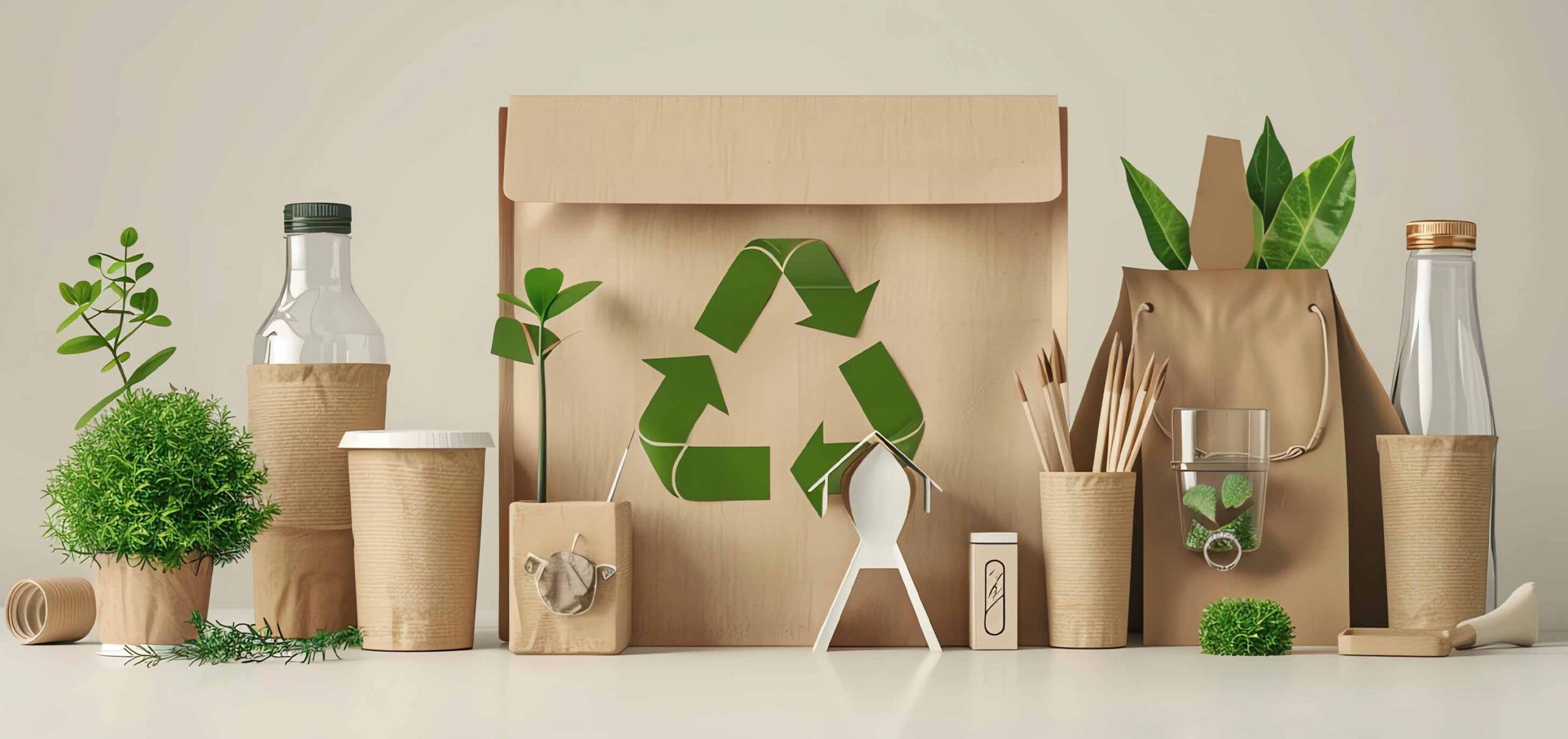
With over five decades of advising Fortune 500 brands on innovation trajectories, we have witnessed countless “inevitable” industry transformations that completely transformed the industry, while some others never materialized quite as expected. Nevertheless, what is happening in the packaging industry is quite new, even to us. Recyclable or compostable? The direction that the packaging industry will take needs to be seen. For now, all we can say is that the strategic decisions you take today will determine whether your brand thrives or merely survives in the circular economy.
While most industry experts are still undecided on whether to go recyclable or compostable, the sustainability mandate is no longer a peripheral corporate social responsibility footnote; it is the fundamental axis around which the entire packaging value chain now rotates. For CPGs, converters, and raw material suppliers, the decision between embracing enhanced recyclability and specialized compostability represents a multi-billion-dollar strategic pivot point that will determine their success in the coming decade and beyond.
In this blog, we will take a closer look at the market intelligence, geopolitical currents, technological breakthroughs, and competitive strategies shaping the future of packaging, offering you the granular foresight needed to align your capital expenditures and R&D pipelines for maximum return and resilience.
What is driving the Future of Packaging Transformation?
The packaging industry, as we speak, is at an inflection point with ever-growing regulatory pressure, consumer activism, and technological capability converging with unprecedented force. ased on the forecast, it is clear that it is not just a passing trend but a fundamental restructuring of how products reach consumers.
From a strategic perspective, what makes the future of packaging particularly fascinating is the regulatory framework being established globally. The EU’s Packaging and Packaging Waste Regulation mandates that all packaging must be recyclable via economically viable systems by 2030, while confining hazardous substances and imposing stringent reduction targets. California’s SB 54 goes one-step further, requiring all single-use plastic packaging and foodservice ware to be recyclable or compostable by 2032, with a 25% reduction in plastic packaging and a 65% recycling rate.
For the packaging industry, all these are legally binding deadlines that will have a direct impact on the global supply chain architecture. Several North American brands, such as Unilever, Nestlé, Walmart, Target, and PepsiCo, have already committed to 100% reusable, recyclable, or compostable packaging by 2030, which is expected to have a cascading effect, forcing their supplier networks to adapt or lose contracts worth billions.
However, these regulations are only half the story. Consumers, especially Millennials and Gen Z, who will be driving nearly 70% of buying decisions by 2030, consider packaging sustainability a proxy for brand credibility. They are not only ready to pay premiums for eco-friendly packaging; they are also willing to step away from brands that fail to demonstrate genuine progress. As a result, sustainability is no longer a matter of corporate social responsibility; it is about protecting market share.
Will Recycled Packaging Dominate the Future of Packaging by 2030?
When we look at the recyclable packaging market through a purely pragmatic lens, it’s clear that it currently has a significant structural advantage over compostable alternatives. While paper and board materials command nearly 40% of the sustainable packaging market share, plastic packaging materials, with their controversial reputation, still hold around 42.12% of the market share, thanks to their versatility and sealing efficiency.
The recycled packaging infrastructure has been meticulously developed, leveraging collection networks, sorting facilities, and reprocessing plants. In contrast, the compostable packaging faces nascent infrastructure and recycling systems that process millions of tons annually at proven economic rates. Furthermore, the carbon footprint advantage can be easily quantified: recycling paper, aluminium, and glass can reduce it by up to 70% compared to producing virgin materials. As a result, you get defensible sustainability metrics that withstand scrutiny.
A closer look at the competitive landscape reveals a pragmatic preference. The global packaging leader, Amcor, reports that nearly 94% of its flexible packaging portfolio by area offers a recycle-ready solution, while 95% of its rigid packaging by weight is recyclable in practice and at scale. Amcor purchased in excess of 224,000 metric tons of recycled material for its solutions in 2024, making it clear that recycled-content procurement at scale is technically, and economically.
For the players in this space, the strategic advantage of recyclable packaging can be extended further to material innovation velocity. Mono-material designs, also known as single-polymer structures, play a significant role in simplifying recycling.
These designs are advancing rapidly, with Huhtamaki’s 2024 launch of three mono-material solutions that exemplified the pipeline’s depth. With these innovations, the aluminum layers and multi-polymer laminates contaminating recycling streams can be eliminated, cutting lifecycle carbon by up to 60%. In addition, the paper-based, flexible packaging with its ultra-thin bio-mineral coatings now offers barrier properties once exclusive to plastics, making it easier for you to migrate from problematic multilayer structures.
This trajectory is further validated by venture investment in this space. According to Bain & Company, private equity and venture capital firms have invested more than $6 billion in recycling facilities and bio-based packaging since 2018, with mechanical recycling remaining the dominant technology through 2030. While chemical recycling is promising, it will not scale enough by the end of the decade to materially alter sourcing options for players in this space. Hence, if you are a player in this space, you should focus on mechanical recycling systems that already work.
What are the key drivers pushing sustainable packaging forward and what’s holding it back?
If you are creating strategies to meet the 2030 deadlines, you need to weigh certain countervailing factors to determine whether those deadlines are achievable or require further extensions.
Key Driver Pushing Sustainable Packaging Forward
- Regulation & Environmental Policy: Governments across Europe, North America and certain parts of Asia are continuously mounting pressure through bans, extended producer responsibility (EPR) laws, plastic taxes and incentives for circular-economy compliance. All these bans and laws create a powerful push for recyclable or compostable packaging.
- Consumer Demand & Brand Reputation: Modern consumers, especially the younger generation, prefer products with minimal environmental impact. As a result, brands are compelled to leverage greener packaging to influence their purchase decisions and drive loyalty.
- Corporate Sustainability Goals: We can already see several large packaging brands marketing their solutions as “100% recyclable, reusable or compostable.”
- Innovation in Materials & Processing: Significant advancements in bio-based polymers (such as PLA, PHA), compostable films, fibre-based packaging, and recycling technologies (mechanical and chemical) are expanding the usable portfolio of sustainable materials.
- Circular-economy and Supply-risk Mindset: The growing popularity of edible or compostable packaging, or recycled packaging with verified supply chains, is helping manufacturers minimize their dependency on virgin fossil-based plastics, curbing exposure to oil-price volatility and supply disruptions.
Key Challenges and Restraints Slowing the Transition
- Cost and Performance Trade-Offs: The cost of compostable or bio-based packaging remains higher than that of conventional plastic or paperboard. There are also functional issues, such as barrier properties, durability, and shelf life, which can be sub-optimal compared to traditional multilayer plastic packaging. All these things are especially relevant for industries such as food, beverages, and cosmetics, where shelf life matters.
- Waste-Management Infrastructure Gap: Compostable packaging offers environmental benefits only when properly composted, and even that requires industrial composting infrastructure. Several regions, particularly in emerging economies, lack this infrastructure. In addition, recyclable packaging needs effective collection and sorting.
- Standardization and Consumer Confusion: Many manufacturers use terms such as “biodegradable,” “compostable,” “recyclable,” and “recycled content” loosely. This misleading labelling can undermine trust and lead to contamination during composting/recycling.
- Uncertainty in Long-Term Behaviour & Regulation: There is a lingering uncertainty on investing heavily in materials that could later be regulated out or become cost-prohibitive.
Region-level Dynamics of Packaging Market
Europe: The European region has historically led the charge for most environmentally friendly initiatives. With a blend of regulations in the form of single-use plastic bans, circular-economy mandates, and strong consumer demand, there is a surge in demand for both recyclable and compostable solutions. Most major players in the packaging industry are increasing their investment in paper-based and compostable packaging.
North America: There is a significant surge in demand for compostable and recyclable packaging materials, driven by regulatory and state-level policies, as well as corporate sustainability goals. The compostable packaging market is growing rapidly in this region.
Asia-Pacific (including emerging economies): This is perhaps the fastest-growing region for sustainable packaging demand. Especially in markets like India, demand for paper- and recycled-material packaging is increasing, driven by rising consumption, regulatory changes, and growing awareness. However, infrastructure limitations, such as waste collection, composting, and sorting, pose serious challenges.
Hence, across the global packaging market, everything from geography to regulations to waste-management maturity to consumer awareness will play a critical role in establishing the perfect balance between recyclable and compostable packaging in different regions.
What Industry Leaders Are Doing: Innovation, Production, and Strategy?
The global packaging giants are already betting big on both fronts. Here are a few noteworthy examples:
- Amcor: They have grown their sustainable packaging product line, launching recyclable shrink bags (e.g., their PrimeSeal™ Eco-Tite®) and bio-based packaging films. Amcor is also showing its ambition to make packaging either “100% recyclable, reusable, or compostable.”
- Mondi Group: With a rich network of alliance partners, Mondi Group is pushing recycled paper and kraft fiber packaging, e.g., for food staples like flour, sugar, and pasta, through developments like EcoVantage kraft paper packaging.
- Tetra Pak: They have remained active in fiber-based aseptic packaging, working to optimize the material mix for recyclability, resource efficiency, and sustainable sourcing.
In addition, manufacturers are also scaling their production capacities for compostable packaging, including films, molded trays, and single-use bags/containers, in anticipation of stringent regulations, rising demand, and corporate ESG commitments.
Based on these insights, it’s clear that manufacturers are not betting entirely on recycled-content packaging or compostable options; if anything, they are introducing more flexibility in their offerings. This increased flexibility will become a key competitive advantage of these manufacturers.
Conclusion: By 2030, what is more likely: Recyclable or Compostable?
If we have to put our bet on one – recyclable or compostable – we will bet on a hybrid future. Here is why:
- Recyclable/Recycled-content packaging: This packaging will continue to dominate sectors where durability, performance, supply-chain scale, and cost are significant factors. These sectors include food, beverages, consumer goods, retail packaging, and logistics.
- Compostable/biodegradable packaging: This packaging material will gain strong traction in fast-growing niches, especially single-use, short-life applications and markets/regulatory jurisdictions. These sectors include foodservice, takeaway, e-commerce mailers, disposable items, and areas with limited robust recycling infrastructure but improved compostable waste.
- Regional Differentiation: Regional trends will also play a pivotal role, with developed regions such as the EU and North America continuing to move toward a mix of high-quality recyclable and compostable materials. For fast-growing and emerging markets such as Asia-Pacific and some parts of Africa/Latin America, there will be a strong inclination toward recycled-paper/cardboard solutions, at least in the near-to-midterm, due to cost, availability, and lower capex for recycling vs composting infrastructure.
- Increasing Packaging Innovation: As we move forward, packaging will become part of the product lifecycle, with reduced weight, minimal materials, mono-materials for easier recycling, increased use of bio-based polymers and fibers, and gradual overall material reduction. The brands that will dominate the packaging market leading into 2030 are not the ones waiting for perfect information or industry consensus. They will be the ones leveraging custom research to unlock opportunities during the transition, building supplier relationships, gaining access to constrained recycled feedstock, and investing in consumer education, thereby making their sustainability claims credible rather than confusing.
Ready to Navigate the Future of Packaging with Confidence? Just write to us at marketing@datamaticsbpm.com, and our market research experts will reach out to you with solutions tailored to your business needs.