












In this debut episode of the CFO Talk Series, Suhani Garg sits down with Joe Iafigliola, President of Process-Smart – a firm transforming how SMBs scale through smarter, outcome-driven outsourcing – to uncover how SMBs can fast-track growth, and drive quality, velocity, and savings, without adding overhead. From speeding up proposal turnaround and boosting conversion rates, to navigating trust barriers and leveraging AI for smarter operations, Joe shares practical insights on how SMBs can scale faster, operate leaner, and compete with larger companies. A must-listen for any CFO, finance leader, or SMB owner looking to do more with less — and turn growth into real profitability.
Don’t miss Outsourcing for SMBs: What Works, What Doesn’t, and What’s Next
Voices Behind the Vision: Meet Our Host and Guest

Joe Iafigliola
President, Process-Smart
Joe Iafigliola is a veteran finance executive and entrepreneur with over 20 years of experience helping businesses scale smarter and faster. He served as CFO of Safeguard Properties, one of the largest mortgage field services companies in the U.S., where he played a key role in operational and financial growth.
Today, Joe is the President of Process-Smart, a firm focused on helping SMBs unlock speed, accuracy, and cost efficiency through outcome-driven outsourcing. With decades of hands-on experience building high-performing offshore teams, Joe is recognized for his candid insights, practical strategies, and expertise in translating finance operations into measurable business impact.
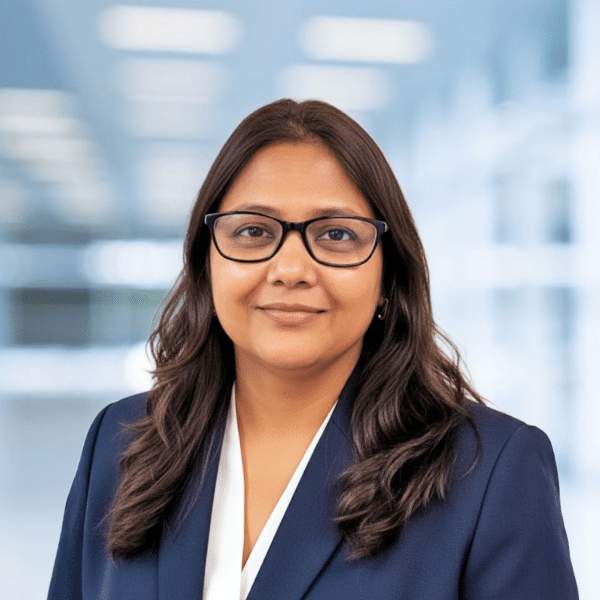
Suhani Garg
Senior Vice President, Datamatics Business Solutions
Suhani Garg is a seasoned finance leader with over 18 years of post-qualification experience across finance functions, distinguished for her expertise in FP&A, business finance, and strategic planning. She has extensive international experience, collaborating with teams across the U.S., Europe, and Asia-Pacific, and has led transformations in business integration, mergers, and system implementations.
Currently Senior Vice President at Datamatics Business Solutions, Suhani specializes in enabling finance leaders to scale operations, optimize processes, and drive strategic decision-making.
Suhani: Welcome, Joe, to our CFO Talk series, and thank you for taking the time today. We know that you have had a very impressive journey at Safeguard Properties, and now you are having Process-Smart. So, from leading finance at Safeguard Properties to building a BPO that delivers the outcome-based services for small and mid-market companies, what motivated you to bring together your experience in corporate finance and your passion for operational excellence in the outsourcing industry?
Joe: Yeah, great question. I think that the journey started as I moved from a company called McMaster-Carr into Safeguard Properties. At the time, the US was going through the tail end of the Great Recession, and the way the mortgage market works is there’s usually a tail. So, if the most severe portion of the recession is 2009, 2010, the impact on the housing market didn’t really hit till 2011 through maybe 2014. At that time, Safeguard was processing almost 2 million photos a day as evidence of work completed in the field. And so because this is a mortgage field service firm, the work is typically done on vacant and abandoned homes. And so there’s no homeowner there to verify that you patched the roof, that you fixed a window, that you remediated a safety hazard. And so all of the work completed is based on photos. So even today, with all the advances in AI, photo recognition still is 93% to 97% accurate. And for this particular industry, because you have to file claims at the end of the process, you need, you know, 99.7-99.8% type accuracy rates in order to be successful for your clients. So at the time, we had probably 1,600 people whose sole job it was to compare a photograph to what was described as work completed – to confirm and then use photographs to identify potential safety or other preservation issues that need to be fixed. So this was an overwhelming task. And so I was tasked to figure out how to mitigate this process. And so, we had opened multiple offices in the US. We were training classes of 60, 70 people every few weeks. And it was, it was just really a challenge. So I had met with a few folks, we had talked about considering BPO and offshoring. And so we took the plunge.
We started off with just a few folks doing what I call type two error reviews, where you have a photo with a condition present, but the contractor didn’t complete the work. And so we would then make a list of all the things that could be completed, send it back to the contractor to do that work. And it worked very successfully. And so after that, over the course of a few years, we just progressed and started to utilize folks in India, folks in the Philippines, folks in Guatemala, to do more and more of this work to support our operations, both to give us 24/7 coverage so that we could turn to work faster. And then, you know, we really engaged with some really great people, very well-educated people that could help us really drive quality. So we did that in my capacity at Safeguard. And then as we went forward, there was an opportunity to work with a landscape company. And that landscape company was implementing an ERP system to control their workflows. The system is called Aspire. ServiceTitan bought Aspire about three years ago. The ERP system really enabled the landscape company to put together structured data sets so that they could control their accounts payable, their accounts receivable reporting, etc., and enabled the company to really leverage and utilize the offshore BPO resources to do a lot of those back-office tasks. And so I really thought that there was a nice opportunity for smaller and medium sized businesses to take advantage of the wealth of talent around the world to drive their operations. Large corporations have been doing this for, you know, 50 years, sometimes, you know, with other companies and sometimes starting their own operations. For instance, like PricewaterhouseCoopers, I think has a 10,000 person office in Mumbai. So it’s something that these larger entities have done. And so we really wanted to democratize it so that if you only needed a person, or maybe even a half a person, then we could implement and support the business so that you could get the benefits of leveraging those people, leveraging the time, and really driving and reducing costs in your business.
Suhani: Yeah, so as you mentioned, large organizations have been doing it since quite long and for decades they have been outsourcing their functions. And, but still, when we look for, or speak to the smaller and mid-size organization, the old, traditional image of outsourcing as an IT call center, comes up. It is not relevant these days now, right? So what has driven the shift and how are smaller companies thinking of outsourcing as more of a strategic partnership today?
Joe: So, I think two things, one, the, IT function, and particularly in India, the talent of the programmers in India is world class. And so, I think that, you know, IT outsourcing, AI coding, model training, all of that is still going to be a huge part of this. But with COVID and kind of the forcing of businesses to figure out ways to operate without being face to face, It really opened people’s eyes to this being a possibility. I mean, I think that what I see in a lot of businesses when I first help out, most of them have really poor processes. They don’t follow the same routine if they do a purchase order or they process an invoice, or they work with a customer or they follow up on a lead. It’s very inconsistent. It’s very manual. And even though it’s, you know, 2025, the processes you could transport them back to 1960 and the people there would recognize these processes. And so what we have to do is clean up these processes in partnership with our clients so that it doesn’t take a person walking by another person to explain what they meant that the structured data sets carry through. To answer your question now with that background, companies are thinking more of a strategic partnership because you can really take advantage of 24/7 processing. With the time difference in India being anywhere from nine and a half hours to, I guess, 12 and a half hours, depending on where you are in the US, it really gives you an opportunity to work throughout the day, gather information, and then at four or five or six o’clock local time, pass that information off to an offshore partner in another country, and have them take that information, take those services, process that, answer questions, you know, leverage AI, whatever, so that when the person is back in the US the next morning, they’re ready to go. And so that velocity is a huge strategic advantage for our clients.
You know, we did a study, and when you make a proposal, from the time you talk to the client to the time they receive that proposal, your chance of success is really exponentially degrading. If you get back to them two days later, we notice a 10 to 15% decline in the yes rate and the acceptance rate. If you get back to them two weeks later, it’s like an 85% decline in the acceptance rate. And so that velocity creates a big advantage for companies that are leveraging a global workforce. And, you know, the difference is with our approach and the approach we’ve taken with smaller businesses, they can take advantage of this global leverage to service their clients better and mimic some of the larger companies. So that’s where I think it’s shifted to just, hey, give it to the offshore team to code and create a database to drive and create value and velocity to help serve customers better.
Suhani: Yeah, just to add, at Datamatics we also focus on that kind of velocity. Our team acts as a true partner, leveraging smart technology and deep expertise to deliver efficient, compliant, and ready-to-use solutions that support our clients’ growth objectives. So my question is: how can a CFO determine when a process is ready to be outsourced, and what key considerations should they keep in mind when making that decision?
Joe: Yeah, so a process is ready to be offshored with BPO when really three things are true. First, the process is relatively repeatable. It doesn’t have to be exactly the same every time. If it is exactly the same every time, you ought to write a bot or something to do it, but that it’s a process that is relatively repeated, like invoicing a client. Two, it doesn’t require physical presence or firsthand knowledge. If you need someone to check in a pallet of fertilizer, and physically check it, like obviously that can’t be done, I mean, I guess you could come up with a camera system, but it can’t be done very easily remotely. And then third, it has to be documented. Now, it doesn’t necessarily have to have all those things at the start. So if you’re thinking about leveraging this as a CFO, you can build that with your partner. But at the end of the game, if you have a process that requires, say, physical presence in front of a customer to talk to them about a design. That’s going to be incredibly hard to offshore. I mean, it’s not a good experience to try to do design via Zoom. So… Yeah.
Suhani: So then you need more of on-client locations, right?
Joe: That’s right. But… What you can do, and this is really, I think, the critical point, is most salespeople, most designers, most customer-facing people, if you actually break down the amount of time they spend in front of a customer or prospect versus the time they spend doing admin work, traveling, doing these other things, I bet you find at most companies, it’s probably about 15% of their time that they actually spend in front of the customer. And so BPO and offshoring can make that 15% into 40%, which is still less than half of their time, but a massive, massive improvement. And that’s a benefit. So, you know, I think CFOs, if you haven’t done this before, if any of the audience hasn’t done it before, start with a simple process, you know, start with AP. Start with invoicing or follow up with customers, balance sheet reconciliation or payroll, something that is relatively consistent so that you learn, you get comfortable with your partner, and then you can go into more, you know, more challenging or more ambiguous tasks.
Suhani: Yeah, it’s about trying something new with the smaller, simpler things and then move on to the bigger things. So that’s applicable to outsourcing when a CFO has to evaluate which process to be outsourced. Now, how do you see outsourcing strategies differ between the large enterprises versus the small and the medium businesses, which are trying to grow and they want to be lean, and fast?
Joe: Yeah, I think that’s a great question. So from what we see, larger enterprises, and we don’t really have any clients that are larger enterprises because larger enterprises generally are gonna outsource to gain efficiency and sometimes scale. And smaller, medium-sized firms really seem to focus on offshoring or outsourcing to help drive growth and help free up time for their most valuable employees. So, you know, most big companies and certainly in Fortune 1000 companies, they have ERP systems. They use SAP, they have all these sophisticated ways to move data. And so, they have processes that really just need to be more efficient, not necessarily more effective.
But for small and medium sized businesses, who are, you know, a 5-, 10- or $20 million revenue company, you know, you get kind of two things. One of the speakers in our industries, his name’s Greg Herring, he talks about a life dividend. And that life dividend really is if you’re a small business and, you know, you and your spouse are working on it together, most likely what’s happening is you’re working all day in the business, whatever that business is, and then at four or five o’clock, you get to then work on the business, doing paperwork, sending invoices, figuring out payroll, borrowing money, doing all the things that are necessary to understand how the business is running. And so, you know, you’re working basically your entire life. And some people can sustain that. You know, there are some people who can sustain that over decades, but most people burn out, and you see a lot of businesses fail because of that. The other thing that we see with the small and medium-sized businesses is they’ll go at $5 million of revenue and make a certain amount of profit. Let’s say they’re making a 10% profit. So that’s 500,000 US dollars. Then they’ll go to $10 million, and they’ll still make $500,000. So they’re doing twice as much work, but the same profit because they had to add a CFO, they had to add a Chief Operating Officer, they had all these overhead functions. And unfortunately, overhead functions don’t necessarily scale with your revenue.
So maybe you need a CFO when you’re at 15 million, but you’re at 10 and so you need, you know, half a CFO and you can’t really do that. So, I think offshoring firms, you know, like ours, really help people scale so that when they’re at $10 million, hopefully they’re not making just 10%, hopefully they’re making 12%, right? But I see way too many businesses who double the size of their business and make the exact same amount of money. And so they’re working very, very hard and they feel like they’re just, you know, caught in like the hamster wheel.
Suhani: Yeah, that’s an interesting perspective. So, you’re talking about life dividends – a very interesting perspective. When you’re starting a business, and you are small, we will manage all these non-core things for you. And you can spend more time on important things that matter in terms of maybe your personal life or maybe doing more business or, you know, anything that matters. But one more concern generally we see in these small and mid-side organizations is the limited budget and limited operational experience. So when they start the new business and suppose if they’re small, it is very difficult for them to, you know, trust somebody else to give up their part of the business to manage or give up their control. So, what are the kind of pitfalls you have experienced which your clients would have faced?
Joe: Yeah, you’re absolutely right. Trust is a major issue — especially for smaller businesses. Most of the time, the company was built from nothing by the founder, and it succeeded because they did everything themselves. They made sure every invoice was perfect, every quote was precise, and they often had personal oversight of the work. So giving that up is really hard. But it’s also the only way to shift from what’s often called a ‘lifestyle business’ to a more professionally run organization.
So how do you build that trust? It starts small. You can trust someone to pay an invoice correctly. You can trust someone to code a credit card receipt. You should be able to trust someone to send reminder emails to customers. Begin with functions that are relatively benign — things where, even if something goes wrong, you can recover easily. I wouldn’t start with proposals or high-stakes customer-facing work, because that’s more sensitive.
But the biggest mistake people make is thinking of outsourcing as a transaction rather than a partnership. Unless you’re buying software or adopting a completely prebuilt process, true BPO requires collaboration. You want the outsourced team to adapt to your processes, maybe even improve them — just like you would expect from a new employee. And that means investing the time to help them understand your business context and your expectations. The investment isn’t huge, but it is necessary.
Where things typically break down is when clients assume we automatically know their internal logic — how they code transactions, which exceptions they make, or, in one real example, how they were using three different versions of QuickBooks to track something. They didn’t tell us any of that. How would we know? Every business has a lot of implicit knowledge. It’s like tying your shoes — you don’t think about every step because you’ve done it 50,000 times. But if someone asked you to write detailed instructions, it suddenly becomes very complicated. That’s why we record our clients in screen-share video sessions actually performing their tasks. When they click a button or reference a file they forgot to mention, we capture it in the SOP. It brings all that unconscious expertise into the light.
And that’s what builds trust — working together, uncovering the hidden steps, and turning implicit knowledge into explicit knowledge. It’s a partnership. People don’t know what they don’t know, and the only way through is to walk the process together.
Suhani: Yeah, and partnership really compounds over time. It takes time for both sides to build trust and get things working the right way. Like any partnership, cultural alignment is absolutely key. In outsourcing, cultural alignment ensures that the service provider not only delivers the work, but does it in a way that reflects the client’s values, ethics, norms, and approach to problem-solving. It’s not just about understanding the process — it’s about sharing a mindset and adapting to a working style that matches the client. That’s really the first step toward building a strong and lasting partnership.
At Datamatics, we place cultural alignment right at the beginning before we even start the work. We look at how quickly and accurately we can reflect a client’s strategic objectives as we take on their outsourced functions. From your experience, what other challenges do companies face? How do you address them? And what does a strong onboarding process look like?
Joe: Yeah, I think what you just said is exactly right. And honestly, the context your team at Datamatics builds early on goes a long way in overcoming most questions that come up.
When it comes to onboarding challenges, the issues usually come down to workflow clarity. I mentioned this earlier, but it’s really about mirroring the client’s processes — their rhythm, their cadence, the way they track information. Whatever system they use, we follow that same rhythm. Now, a lot of clients will say, ‘This is how we do it… but we’re not sure it’s the best way.’ And while we’re not business coaches — there are plenty of those out there — we can absolutely offer tips and practices we’ve seen across teams to help make AP, production, or other functions more efficient.
For us, good onboarding is structured and iterative. You do the work, gather feedback, refine it, and repeat. It’s very much a lean flow process to uncover the details. The first few days are all about shadowing, understanding, creating sample outputs, and getting the client to review those samples to confirm we’re aligned. And that client engagement is absolutely critical. If they’re not actively validating those first 10 or 25 pieces of sample work, then when we scale that to 5,000 pieces, they’re going to be frustrated with the outcome. So getting that early engagement is key to making sure we deliver exactly what they expect.
Suhani: Sure, sure. So now that we’ve talked through the challenges, onboarding, and the small-versus-large enterprise dynamics, let’s shift to the commercial side — because that’s obviously a huge factor in any business decision. Outsourcing typically operates under three commercial models: value-based pricing, activity-based pricing, and time-and-material. So the question is, how does a CFO decide which model is right for them? And in your experience, when does each of these models work most effectively?
Joe: Yeah, so from my experience, Time and Materials is best for open-ended work where you’re doing analytics or you’re doing a study or some marketing effort, where the actual effort required to produce the outcome varies. For instance, if you do a campaign on LinkedIn and as part of that campaign, you’re trying to generate more followers or leads, you could I guess, try to price it for how many followers gained. But it’s a very loose correlation because there’s so many other activities that could be driving that. TNM is best in my mind for transactional processes that are relatively consistent. So, if you’re doing payroll entry for a group of 50 people, it’s probably a relatively same amount of effort every week or two weeks data capture, where you pay per unit of output. And then, you know, I think outcome based is really ideal when speed and quality matters, but also the thing that you’re producing has a measurable value to the client. As an example, if you’re generating a lead and you’re getting paid per lead, the client can clearly see, you know, my typical customer is worth $20,000 lifetime. And so every lead I get is worth, you know, some portion of that. So, if you charge $500 for a lead, that can be pretty reasonable. The lifetime value of that lead is $20,000 versus charging time where it feels very indirect. So that’s kind of my perspective on that.
Suhani: Sure. So if I summarize this, the CFO should first assess the sort of work he wants to outsource and then decide if it is a creative kind of a work, which is like open-ended, or is it a specific work wherein I need the specific outcome. And then based on that, he or she should decide which model will work more effectively in that particular scenario. Maybe with time after they get into the partnership, they can look through if they want to increase more of the outsourcing and see if they need to change the pricing model accordingly. Would you like to share an example where the outsourcing unlocked not just the savings, but the real velocity and the growth opportunities for the client? You spoke about the velocity earlier, but if you can share some of the examples with us and the listeners.
Joe: Yeah, absolutely. So, one of our landscape clients outsourced a big chunk of their estimating process to Process-Smart. Typically, what the business development folks would do is go out into the field and meet with customers; they would gather information and then they would complete the estimate themselves. Well, things get in the way. They have calls, you know; they’ve been out in the field all day. And typically, the turnaround was a week or two from meeting the customer. And this was actually the reason we did that study I mentioned earlier. So we stepped in, and instead of waiting several days for those takeoffs and estimates, we’d receive the information around four, five, or six in the evening. We’d complete the takeoff, plug everything into their production models, build the estimate, and package it for the business development team to review the very next morning. Then after that review and final sign off, they would deliver to the customer and they would absolutely have that proposal within 24 h, actually more like within 12 to 18 h. And so from the study we looked at, if you can get a proposal to a client within a day, within 24 h of when you spoke to them about your project, you’re about 80% more likely to get a ‘yes’, than if you have that time delay. And that’s just because people forget. If you look at, I think there’s been numerous studies on how human brains work, but if you experience like this podcast right now, if you asked us to repeat what we talked about two hours from now, we’d probably do a really good job. Tomorrow, we’d probably do a pretty good job. Two weeks from now, we remember vaguely what we spoke about, and that’s no different from a proposal. So that velocity helps really drive more acceptance of proposals. So, you know, the client not only closed more deals, but they built a reputation for responsiveness that their competitors couldn’t match. And so in this case, you know, the outsourcing wasn’t about cost reduction, although I promise you it was cheaper to do it with BPO, but it was really about velocity, conversion and driving sales growth.
Suhani: Yeah. And it’s also about creating the first impression at the time of the contract when you are doing and then giving them the impression – Yes, we are super-fast in our services!
Joe: That’s right.
Suhani: Right. Okay. So with AI reshaping everything nowadays, of course, including our workplaces and the way we work, how do you see AI will impact the offshore models over the next five to ten years?
Joe: So obviously, anytime you try to predict the future, you’re going to be wrong. So if someone replayed this five years from now, I’ll probably look like an idiot! But nonetheless, my guess is that AI is not going to replace people. I think if you look at AI agents today, they’re impressive in how they build context. I use AI a lot, and very often, it ‘hallucinates’ — meaning it can produce inaccurate or unexpected outputs. This happens because it generates responses based on patterns and confidence intervals from the words you provide. AI is amazing, but it’s still wrong fairly often.
And, you know, you can see many examples when people have translated one language to another where you could have a hundred words that you’re translating. If you get one word wrong, by the way, that’s 99% accuracy, you can change the entire meaning of the set of paragraphs. And so I think that the future in the next five to ten years is that AI will make people super productive. And so the person today that can handle, you know, a hundred invoice transactions in a day is going to be able to handle 500 invoice transactions. So I think it’ll make people, you know, 400% or 500% more productive. People will still be critical to ensure that questions are asked correctly and prompts are written accurately for LLMs. They also need to clean up any inaccurate data. AI struggles with poor-quality data, so the ability to cleanse data is essential. For example, in invoice processing using OCR, grainy images can trip up AI, whereas a human can interpret them correctly based on context. So there will always be a need for that human interface — to clean data, correct AI outputs, and catch hallucinations. In my view, over the next five to ten years, AI will make people far more productive, not replace them.
Suhani: Interesting. So, AI will be more of a supplementary, sorry, not supplementary, AI will be more of a complement, complementing the people and making them more efficient than, you know, replacing them. Now moving ahead, there are a lot of things happening in terms of US policies, and there is a lot of noise about H-1B visa policies getting changed, offshore taxation. etc. Do you think these changes in the policies can shift landscape for the outsourcing industry? What is it that, you know, the CFOs or business owners should be paying attention to as of now?
Joe: So, I mean, certainly these policies could have really big impact on the affordability component of this. I would say that so many of the benefits are unrelated to cost that it’s still going to be an important piece of strategy. But for the most part, it doesn’t seem like any of the governments involved are interested in creating an indirect tax on services, at least so far. You know, the H-1B policy and the $100,000 that’s currently in place impacts people working onshore in the US. But so far, there hasn’t been any of those taxes. And I really think that over the course of, you know, a few years, that sort of fear and tax policy won’t shift to the offshoring of service.
I think data security, compliance, and making sure that you can successfully service a client without putting any of their data at risk is really going to be the important part versus short-term policy, you know, changes. I mean, we may see a tariff on services at some point in time. The thing that I think might prevent it is that the utilization of offshore entities is so great and done by so many entities. For instance, after COVID, the US passed the PPP, Payroll Protection Plan, and, you know, one of the companies I was involved with was eligible for it. Well, when we got the transcript, guess who the reviewer was? The reviewer was somebody in Mumbai. The US government offshored the review of the PPP application process to India. So I think that this utilization of a global workforce is happening far more than people are aware. I don’t think that people are going to intentionally destroy that. But, you know, people are crazy, so you never really know. But I don’t think that over the long term, it’s going to be a big impact.
Suhani: Yeah, okay. So the last question I would like to ask you, what excites you most about the role outsourcing can play in helping the companies scale smarter? We spoke about the small and the mid-size organization, and you also spoke about how outsourcing can help them spend more time on their core activities and expand their business and save efforts on mundane jobs or process-oriented jobs. How do you see outsourcing help them scale bigger in future to come?
Joe: Yeah, so I think the thing that excites me most is that the accessibility of using BPO and offshoring to companies that probably never even considered it as a possibility. We’re collectively giving those firms an opportunity to compete at scale, cost, and speed with bigger companies that have been doing this for many, many decades as we discussed. So, I think that, you know, with AI, with offshoring, you could start and drive a fairly large company with very, very few employees. It’s going to empower entrepreneurs; it’s going to make people with big ideas be able to scale and bring those ideas to market extremely fast. And so I think that this is going to be a huge, huge thing as we continue to educate people on how to effectively utilize offshore talent, you know, to scale smarter and make sure that when they go from $5 million revenue to $10 million revenue, they go from making $500,000 profit to making a million – not going from $500,000 profit to also making $500,000 while their company doubled in size.
Suhani: Sure, Joe, thank you so much for your time today. And of course, to conclude, outsourcing isn’t just a cost saving model, it’s a way to unlock speed, expertise, and growth, especially for the small and the mid-sized organizations. Thank you so much. And thank you everyone for listening and stay connected for more insights on how the business can scale smarter and work more strategically with outsourcing.
Joe: Thank you, Suhani.
Suhani: Thank you.