










The modern B2B market does not run on gut feelings. It runs on information. Most companies think they have enough of it. They think that having CRM systems full of names, emails, and phone numbers is enough. But there is a big difference between having a list of contacts and having “sales-ready” B2B data.
In the enterprise world, data is the engine. If the engine is clogged with old info or missing key parts, the whole machine slows down. Sales teams spend hours on LinkedIn instead of on the phone. Marketing sends emails that bounce. Operations cannot forecast revenue because the reports are a mess.
By the end of 2026, Gartner predicts that 65% of B2B sales organizations will transition from intuition-based to data-driven decision-making. Therefore, the question is – how sales-ready is your data?
This guide explores how to move past basic lists and build a database that helps you win deals.
What is Sales-Ready B2B Data?

Sales-ready data is information that is accurate, deep, and actionable. It goes beyond a simple email address. It tells you who the person is, what their company needs, and if they are currently looking for a solution.
Imagine wanting to sell pizza. Raw data is like having a list of every phone number in a city. It is a massive list, but you do not know who is hungry, who has what food allergy, or who just finished eating. If you started calling every number to sell a pizza, you would waste hours and frustrate many people. You are simply guessing based on a list of names.
Sales-ready data is the opposite. It is like knowing exactly which households ordered pizza in the last month, which ones prefer thin crust, and which ones are currently browsing a food delivery app.
In the B2B world, this means moving past a simple name and email.
Let’s take another example. Imagine you sell cybersecurity software to hospitals. Basic data gives you the name “John Smith” at a hospital in Chicago. Sales-ready data tells you that John is the Head of IT, his hospital just opened a new wing, they use outdated servers, and someone from their office just downloaded a report on data breaches.
When your sales rep calls John with this information, they are no longer “cold calling.” They are entering a conversation with a person who has a specific problem that your software is built to fix.
This level of detail ensures that your outreach is timely and relevant. It changes the interaction from an unwanted interruption into a helpful solution. By using data that is deep and actionable, your team stops chasing dead ends and starts focusing on prospects who are ready to buy.
When data is sales-ready, a rep can pick up the phone and have a real conversation. They do not have to ask basic questions because they already have the answers. They do not have to worry about the email bouncing because it was validated recently.
Key Takeaway
B2B data is only an asset if it reduces the time between a lead arriving and a deal closing.
Also Read: Everything About B2B Data
Red Flags: Is Your Data Failing Your Team?
Before going any forward, it is imperative for you see the problems clearly. Here are three simple red flags that suggest your B2B data is holding you back:
The 15-Minute Rule: If your sales reps spend more than 15 minutes researching a prospect before they feel comfortable making a call, your data is not sales-ready.
The Bounce Barrier: If your marketing email bounce rate is higher than 2%, your cleansing process is not keeping up with data decay.
The “Who is This?” Factor: If your reps frequently call people who say they have never heard of your company or have no interest in your industry, you are targeting and intent data are misaligned.
Why Data Quality is the Silent Killer of B2B Growth?
Most companies lose money every day because of dirty data. They just do not see it happening in real-time. Instead, it shows up as friction in the daily workflow. A sales rep spends half an hour looking for a direct dial because the CRM record is blank. A marketing campaign reaches 5,000 dead inboxes, damaging the company’s sender reputation.
These small leaks might seem minor, but they add up to a massive loss in momentum.
The economic impact is documented and severe. Gartner research shows that poor data quality costs organizations an average of $12.9 million per year.
This is not just about missing a single sale. It covers the cost of labor spent trying to fix errors manually, the cost of storage for useless records, and the missed revenue from prospects who moved to a competitor while your team was busy hunting for a valid phone number.
When your data is bad and messy, your entire go-to-market strategy becomes guesswork.
The Reality of B2B Data Decay
Data does not stay fresh for long. The B2B landscape is in a constant state of flux. People get promoted, companies merge, and offices move to remote work models. This process is known as data decay, and it happens much faster than most leaders realize. It is a silent tax on your CRM.
Recent studies indicate that B2B contact data decays at a rate of roughly 70.3% annually. This means if you buy a high-quality list today, nearly three quarters of it will be wrong in just twelve months. On a monthly basis, you can expect about 2.1% of your records to become outdated.
In an enterprise setting, this decay creates a “Graveyard CRM.” Your database becomes filled with “return to sender” emails and disconnected lines. This does more than just waste time. It skews your analytics.
If your data is 30% wrong, your conversion rates and forecasting models are also 30% wrong. Without a plan to refresh these records, you are building your growth strategy on a foundation that is disappearing every single month.
Key Takeaway
Ignoring data decay is a choice to lose nearly 30% of your database value every year. You must have a continuous system for cleaning and updating records to stay relevant.
The Cure to Data Decay – Enrichment & Cleansing
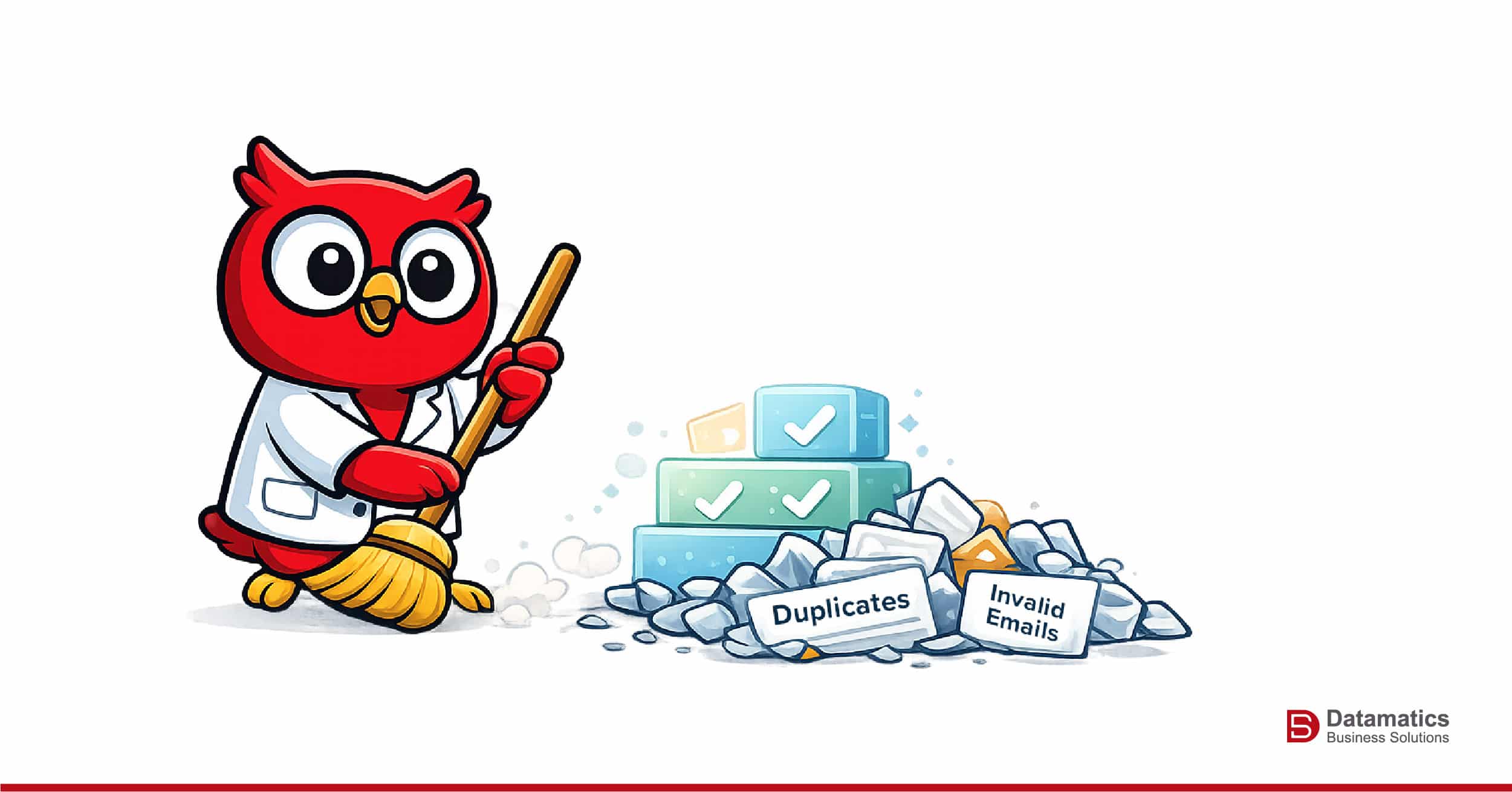
Once you realize how fast B2B data decays, you must decide how to fix it. Many companies treat data management as a one-time project, but it is actually a two-part process. You cannot have one without the other. Data cleansing and data enrichment are the two-part cure for data decay.
If you enrich a database that is full of junk, you are just adding more info to a dead record. If you only clean your data but never add context, your sales team will have accurate phone numbers but no reason to call.
We often hear these terms used together. Often interchangeably. But they solve different problems. To build a great database, you need both to work in a continuous loop
1. Data Cleansing (The Foundation)
Cleansing is about accuracy. It is the process of removing the junk that clogs your systems. Think of this as the maintenance of your database. Without a clean foundation, your automation tools will fail, and your CRM will feel cluttered.
a. Deduplication: Large enterprises often have the same person listed three different times because they signed up for three different webinars. Deduplication merges these into one “Golden Record” so you don’t annoy prospects with triple outreach.
b. Standardization: If one rep enters “VP of Sales” and another enters “Vice President, Sales,” your reporting becomes a mess. Standardization ensures all titles and addresses look the same, making it easier to run filters.
c. Verification: This is the “is it real?” check. It involves pinging email servers to see if an address is still active and checking phone directories to ensure numbers are still assigned to the right person.
2. Data Enrichment (The Depth)
Enrichment is about context. It takes a clean record and makes it rich. Once you know a contact is real, you add layers of information that help with targeting. This is where your marketing team gets the insights, they need to write better copy.
a. Firmographics: This includes the nuts and bolts of a business, such as annual revenue, employee count, and specific industry sub-sectors. It helps you prioritize large accounts over small ones.
b. Technographics: This is a game-changer for sales. It tells you what software or hardware the company already uses. If you know they use a competitor’s CRM, you can tailor your pitch to show why yours is a better fit.
c. Intent Data: This is the most modern layer of B2B data. It tracks behavioral signals, like a company searching for “best cloud security tools” on third-party sites. It tells you who is in a “buying window” right now.
Without data cleansing and data enrichment, your database is either accurate but shallow or detailed but broken. By combining cleansing and enrichment, you transform a simple list of names into a strategic map for your sales team to follow.
Key Takeaway
Cleansing ensures you are reaching a real person. Enrichment ensures you are reaching the right person with a message that matters. To fight data decay and ensure that your sales is air-tight, you need both data enrichment and data cleansing to work together.
Bonus Read: Understanding Data Enrichment vs Data Cleansing
Using Technographics for Competitive Displacement
If firmographics tells you where a company is, technographics tells you how they work. In the enterprise world, you are rarely selling into a vacuum. Your prospect already has a stack of tools they use every day. If you do not know what those tools are, you are walking into a meeting blind. This is why technographics is often the most valuable layer of B2B data for a sales team.
Technographic data tells you the digital DNA of a company. It reveals the software, hardware, and IT services a prospect currently uses. For an enterprise sales team, this is like having a map of the prospect’s current setup before you even say hello.
If you know a prospect uses a competitor’s product, you can change your pitch entirely. You do not have to waste time explaining what your category of software does. Instead, you focus on why your specific tool is a better fit than the one they already have. This shifts the conversation from a general sales pitch to a specific upgrade conversation.
According to industry reports, companies that use technographic data to segment their audience see an increase in sales productivity by up to 15%. It allows your team to stop cold calling and start informed calling.
So, how to use technographics in 2026?
a. Targeting Renewal Dates: If you know a company has used a competitor for three or four years, they might be nearing a contract renewal. This is the perfect time to offer a better alternative before they sign for another year.
b. Identifying Gaps: If they use a high-end CRM but no data cleaning tool, you can show them how your service fills that specific gap in their workflow. You aren’t selling them a whole new car; you are selling them the specialized engine part they are missing.
c. Customized Content: Your marketing team can send case studies about switching from a certain competitor to your platform. This makes the prospect feel like you truly understand their current struggles and have a proven path for them to follow.
By understanding the technology your prospects rely on, you move from being a generic vendor to a strategic partner who understands their unique technical challenges. This intelligence ensures that every interaction is grounded in reality rather than assumptions.
Key Takeaway
Technographics turn a blind outreach attempt into a tactical strike. It allows you to enter a conversation with the context needed to win.
The Mysterious Case of Buying Group in Enterprise Sales
Technographics is essential. That we have established. But enterprise sales in 2026 is seldom about targeting one buyer. Buying Group data tells you who actually has the power to make the decisions.
One of the biggest mistakes in B2B sales today is treating a lead as a single person. Today, the “lone wolf” buyer is a myth. One person rarely makes a decision alone.
According to Gartner, a typical B2B buying group now consists of 6 to 10 stakeholders. Think about your own office. If you want to buy new software, you probably need the department head to say yes, the IT manager to check for security, and the finance lead to approve the budget. Finally, an executive sponsor has to sign off on the whole thing.
If your B2B data only shows you one of these people, your deal is at risk. You might have a great relationship with the user, but if the IT manager has never heard of you, they can kill the deal at the last minute. This is why data enrichment is so vital. It allows you to see the Account Hierarchy. It helps you find the stakeholders who are hiding in different departments so you can build a relationship with the whole committee.
Mapping this buying group early prevents those silent deal-killers from ruining months of work. When you have a full map of the buying group, you aren’t just selling; you are navigating the organization with a GPS.
It ensures that no matter who leaves the company or who gets promoted, your deal remains stable.
Key Takeaway
You do not sell to a person; you sell to a buying group. Your data must reflect the entire buying group to be successful
Why "Orphaned Leads" are Breaking Your Buying Group Strategy
It is one thing to know that a buying group exists. But it is another thing to actually see them in your system. In an enterprise, you do not just sell to people; you sell to organizations.
However, most CRM systems are a mess of disconnected names. One person from a company might sign up for a webinar using a Gmail account. Another might use their work email but misspell the company name.
This creates what we call orphaned leads. People who belong to your target accounts but are floating alone in your database like lost puzzle pieces. If you cannot see that these people belong to the same company, your buying group strategy is just a theory.
This is where Lead-to-Account (L2A) Matching becomes essential. It is the process of automatically linking individual leads to the correct parent company. Without this, you are flying blind.
Just imagine that your sales rep is talking to a manager at a big tech firm, but doesn’t know that the CFO of that same firm just downloaded your pricing guide. They are missing the most important signal of the deal, essentially having two different conversations with the same company without realizing it.
High-quality B2B data acts as the glue in this process. By using unique identifiers like company domains, IP addresses, or tax IDs, you can ensure that every new lead is instantly mapped to the right account.
This gives your sales team a birds-eye view of the entire organization. It allows them to see the full picture of who is interested, who is researching, and who still needs to be convinced.
When your leads are properly matched, your CRM stops being a list of random names and starts being a map of your future revenue.
Key Takeaway
You cannot map a buying group if your leads are not connected to your accounts. L2A matching is the technical bridge that makes account-based selling actually work in the real world.
From Volume to Value: Turning B2B Data into an ABM Spear
Once your leads are matched to accounts and your buying groups are visible, the way you market changes. For years, marketing teams focused on volume. They chased MQLs (Marketing Qualified Leads) like they were collecting trading cards. They wanted as many names as possible, regardless of quality. But many of those names were low value. It included students, researchers, or people just looking for free templates.
Account-Based Marketing (ABM) flips this old model on its head. Instead of throwing a wide net and hoping to catch a few fish, you use a spear. You stop worrying about having 5,000 names and start focusing on the 50 high-value companies that actually move the needle for your revenue. This transition is powerful, but it is impossible without high-quality B2B data.
So, what is the blueprint for an ABM-ready database?
Don’t just say “we target tech companies.” Use your data to find your best customers. Look at their revenue, their growth rate, and even their geographical location. If your best customers are mid-sized fintech firms in Europe, your data should help you find every single company that fits that mold.
Remember, not every company in your ICP is ready to buy today. Some are just starting to look, while others are in a “buying window” right now. By using intent data, you can see which companies are actively searching for your specific solution and prioritize them.
An IT Director cares about security. A CFO cares about ROI. Because you have enriched your data, you can send different, highly specific messages to each person in the buying group.
Research shows that 77% of high-performing B2B companies now use data-driven segmentation instead of basic firmographics alone. They have realized that in 2026, relevance is the only way to get a prospect’s attention. By narrowing your focus, you actually expand your results.
Key Takeaway
ABM is impossible without deep, enriched data. It is better to have 50 deep, accurate profiles than 5,000 shallow, outdated ones.
How to Build a Sales-Ready Pipeline
Building a data-driven sales motion requires a clear, repeatable process. You cannot just buy a random list, dump it into your CRM, and hope for the best. That approach leads to high bounce rates and frustrated sales reps.
Instead, you need a pipeline that filters and refreshes itself automatically. So, what are these?
Step 1: Define Your Ideal Customer Profile (ICP)
Before you look for new data, you need to look at your old successes. Use your existing customer data to see which industries, company sizes, and job roles bring in the most revenue.
If you don’t know who your best customers are, you will end up with data for prospects who will never buy from you. Your ICP is the North Star for your entire data strategy.
Step 2: Data Ingestion and Enrichment
Once you have your target list, you need to fill in the blanks. Raw data is often skeletal. Just a company name or a website. Data enrichment providers like Datamatics Business Solutions take that skeleton and add the “meat.” This includes the names of decision makers, the latest funding round, the office location, and the tech stack they use. This is the stage where you turn a contact into a person with a story.
Step 3: Regular Cleansing
Since B2B data decays at a rate of 2% every month, you need a monthly cleaning habit. If you ignore your database for six months, 12% of it is already wrong. Regular cleansing involves removing duplicates, updating job titles for people who have moved on, and purging dead email addresses. This keeps your deliverability high and your sales team’s morale even higher.
If you want to have sales-ready data, follow the above steps and you will be good.
Key Takeaway
A structured process ensures your sales team always has fresh leads. Data hygiene isn’t a one-time event; it is a monthly discipline.
The Role of Data Governance and Compliance
In an enterprise environment, “growth at all costs” is a dangerous mindset if it ignores the legal reality of data privacy. You cannot simply scrape the web or buy unverified lists and hope for the best.
With the evolution of privacy laws like GDPR, CCPA, and newer 2026 regional regulations, the stakes have never been higher. If you use B2B data that was collected without proper consent or via non-compliant methods, your company isn’t just facing a fine. It is facing a permanent blow to its brand reputation.
The Golden Record: Your Single Source of Truth
Data governance is about more than just staying out of court. It is about ownership and synchronization. In many companies, the Marketing team has one set of data, Sales has another, and Customer Success has a third. This leads to data silos. A situation where no one knows which phone number is actually the right one.
To solve this, you need a “Golden Record” for every account. This is a single, master version of a prospect’s information that is verified, compliant, and synced across every department. When your data is governed correctly:
Marketing doesn’t spam people who have opted out.
Sales doesn’t call a contact that is already being handled by an Account Manager.
Legal can rest easy knowing every record has a clear lineage showing where it came from and why you have the right to use it.
In 2026, data governance has become the security guard of the revenue engine. It ensures that the information fueling your automation is not just accurate, but ethical.
Key Takeaway
Strict data governance protects your brand from legal trouble and ensures everyone in the company is looking at the same facts. Without a Golden Record, you aren’t running an organization—you are running a collection of disconnected departments
How Datamatics Business Solutions Can Help with Your B2B Data Strategy?
Building a sales-ready database is a massive task for any internal team. This is where DBSL steps in. We provide the scale and the technology to turn a messy CRM into a high-powered revenue engine.
For over 50 years, we have helped enterprises manage their most valuable asset: their data. Our approach is built on a hybrid model. We use advanced technology to process millions of records, but we keep human researchers in the loop to ensure accuracy. This allows us to hit 95%+ data accuracy—a level that automated tools alone rarely reach.
One of the biggest struggles in B2B is the “garbage in, garbage out” problem. We solve this through specialized data cleansing and enrichment services. As a leading B2B data services provider, we do not just run a script. We find duplicates, fix formatting, and validate every contact point. We ensure your emails land in inboxes and your reps have the right phone numbers.
Beyond cleaning, we provide strategic data enrichment. We add the missing pieces. Whether you need firmographic details to find your ICP or technographic data to see what tools your prospects use, we provide the depth needed for complex sales.
We also specialize in buying group mapping, helping you identify the important stakeholders in an account.
Data decay never stops, so we do not either. We provide continuous updates to keep your database fresh and reliable. By partnering with DBSL, your teams can stop playing data detective and go back to what they do best: selling and marketing. We take the grunt work out of data management so you can focus on growth.
Want a walkthrough of our B2B data solutions? Fill out the form here to get a call from our experts.
Final Thoughts: The Road to Sales Readiness
The gap between a company that hits its targets and one that misses is often the quality of its B2B data. You can have the best product and the best sales reps, but if they are working with the wrong information, they will fail.
Start with a clean foundation. Layer on deep insights through enrichment. Map your buying groups. When your data is sales-ready, your whole organization moves faster.
Like what you read? Subscribe to our newsletter and stay on the top of the latest trends and insights.
Frequently Asked Questions (FAQ)
Q1. What is the difference between B2B data cleansing and enrichment?
Data Cleansing is about fixing what is already there. It removes errors, typos, and duplicates. Data Enrichment is about adding what is missing. It brings in new details like company revenue, job titles, or intent signals.
Q2. Why does B2B data decay so fast?
The business world moves quickly. People change jobs, companies merge, and roles shift. On average, about 30% of your contact data will change every year.
Q3. How does bad data impact my sales team?
Bad data leads to wasted time. Reps spend time calling disconnected numbers or emailing people who no longer work at a company. It kills their productivity and lowers their morale.
Q4. Is intent data worth the investment?
Yes, for high-value sales. Intent data shows you which companies are currently searching for your solution. This allows you to reach out at the exact moment they are looking to buy.
Q5. Can I clean my data myself?
Small lists can be cleaned manually. However, for enterprise databases with thousands of records, you need professional services to maintain accuracy and scale.

James Libera