












Okay. Here is an uncomfortable truth that many don’t want to talk about. Account-based marketing is a golden goose, but most ABM programs fail before they even get started.
I know that sounds harsh. But I have watched too many smart marketers pour six figures into ABM strategies that go absolutely nowhere. They have got the right idea. They target high-value accounts with personalized outreach instead of spray-and-pray tactics. The logic is sound. The execution? That is where the ABM strategy falls apart.
The data tells us a solid ABM strategy works. When asked, 97% of marketers say it delivers higher ROI than traditional methods (Source: Denave). But here is what the same research won’t tell you. Most of those ABM strategies never make it past the pilot phase. They launch with fanfare, show some early promise, then quietly die in the backlog when the deals don’t materialize.
The problem isn’t the ABM strategy itself. It is the thousand tiny execution mistakes that kill your momentum before you ever get traction.
If your pipeline’s gone quiet and your sales team is starting to ask questions about “marketing’s new ABM strategy,” chances are you are making at least one of these five mistakes.
In this blog, I have highlighted five things that are actually breaking your ABM strategy. And more importantly, how to fix it.
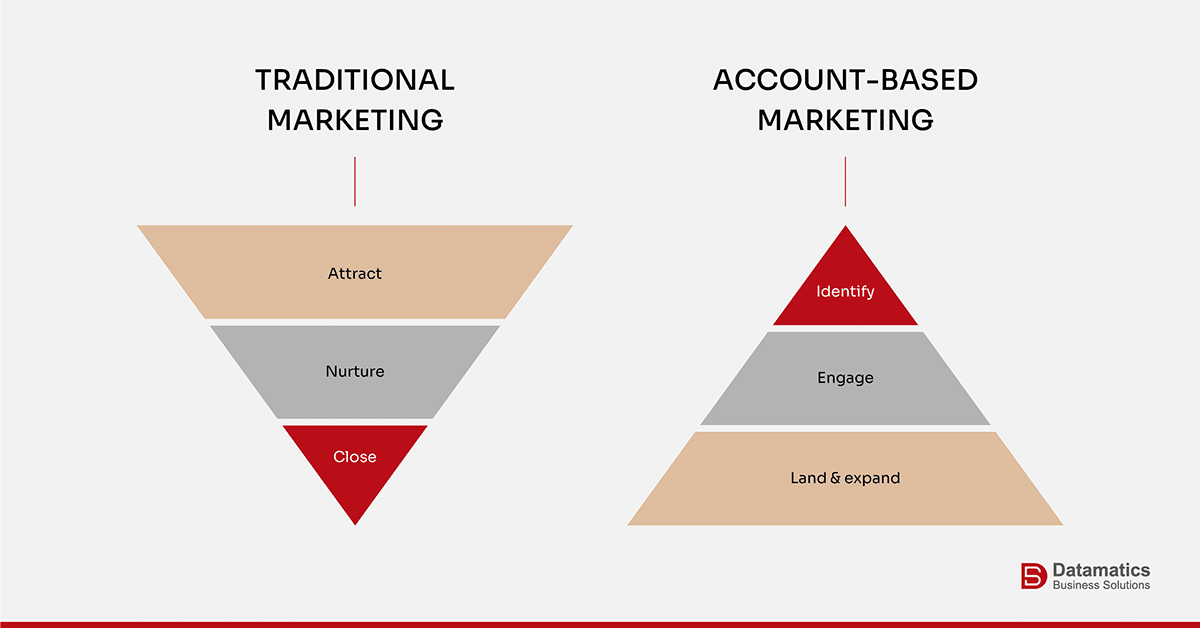
Mistake #1: Your ABM Strategy Is Trying to Boil the Ocean
Key Takeaway
For successful account-based marketing, select a focused list of truly high-value accounts. Invest your time and resources into building relationships and winning 3 major deals, rather than spreading efforts thin across 50 that may not know you. Quality targets drive better results.
Recommended Reading: How to Win High-Value Accounts?
Mistake #2: Your ABM Strategy Has Sales and Marketing Running Separate Plays
Here is a scene I have witnessed too many times. Marketing runs a sophisticated multi-touch ABM campaign to engage the CMO at a target account. They get them to download three pieces of content, attend a webinar, and visit the pricing page twice.
Marketing celebrates. They pass the “hot lead” to sales.
The sales rep takes one look and says, “We don’t sell to marketing. I need to talk to the CRO.” The lead goes cold. The CMO gets a generic sales email three weeks later. Maybe they got added to the monthly newsletter. Everyone is frustrated.
Your strategy just wasted resources.
This is what a misaligned ABM looks like. And it is costing you deals.
Only 36% of companies say their sales and marketing teams are actually aligned. That means nearly two-thirds of ABM campaigns have two teams running different playbooks, targeting different people, and defining success differently.
The really painful part? A study from HubSpot shows that companies with tight sales-marketing alignment in their ABM campaigns are 103% more likely to crush their revenue targets. You are leaving real money on the table.
So how do we fix this?
Set up weekly sync meetings with your sales and marketing teams. And I am not talking weekly task check-ins. Build your strategy using the same CRM, the same account scores, the same playbooks.
When sales know marketing is running ads to the CFO while they are calling on the CTO, they can coordinate the approach instead of stepping on each other’s toes. Alignment isn’t a nice-to-have in ABM. It is table stakes.
Key Takeaway
Ensure your sales and marketing teams are in sync. Hold weekly meetings to better align them. Use the same data and the same goals to guarantee you all play for the same team, not separate ones.
Mistake #3: Your ABM Strategy's "Personalization" Isn't Fooling Anyone
Be honest for a moment. When was the last time your ABM campaign delivered truly personalized content to a target account?
I am not talking about mail-merge personalization where you swap out the company logo and call it a day. I mean actual content that shows you have actually done your homework. Content that references their recent earnings call, their new product launch, or the competitor breathing down their neck.
Most ABM campaign content is embarrassingly generic. I am talking about industry insights that could apply to literally anyone in the sector. Or case studies from companies your target account has never heard of. Or maybe thought leadership that sounds like it came from a B2B Mad Libs generator.
Your prospects are smart. They can smell template content from a mile away. And when they realize your ABM program sent them the same asset you sent to 50 other companies, they tune out.
Research shows that genuinely personalized messaging in your ABM effort drives a 20% lift in engagement. But here is the thing. This stat only applies to actual personalization, not logo-swap theatre.
Again, how do we ensure proper personalization?
Build an ABM strategy that creates content solving a specific problem for a specific account. Yes, this takes more time. Yes, it is harder to scale. But that is exactly why a personalized ABM campaign works.
When you send the CFO at a target account a one-pager about how companies in their vertical are handling the new revenue recognition standards, they notice. When you reference their CEO’s recent interview about expanding into APAC, they pay attention. A quality-focused ABM beats volume every single time.
Key Takeaway
Personalization is a one-of experience. Not generic. To ensure success for your ABM program, create content that solves a specific problem for a specific account. Quality content beats a high volume of generic collateral.
Mistake #4: Your ABM Strategy Is Measuring the Wrong Things
Pop quiz! What is your ABM campaign’s click-through rate?
If you knew that number off the top of your head, we need to talk about your ABM strategy.
Don’t get me wrong. Email metrics have their place. But if you are judging your ABM success by opens and clicks, you are optimizing for the wrong outcome. Those metrics tell you if people saw your message. They don’t tell you if your strategy is actually moving accounts through the pipeline.
So, what shows campaign success?
Is the buying committee expanding? Are multiple stakeholders engaging? How fast are target accounts moving from awareness to consideration to decision?
These are the signals your ABM program needs to track.
Yet only 52% of companies actually measure the ROI of their ABM campaigns. The rest are flying blind, tracking vanity metrics while their ABM pipeline velocity stays flat.
The data on this is striking. Accounts influenced by a targeted strategy move through the pipeline 234% faster than organic accounts. But you only know this if your ABM strategy measures pipeline velocity, not just lead volume.
So, what do we do to make this better?
Rebuild your dashboard around account engagement and pipeline velocity. Track things like the number of engaged contacts per account, buying committee coverage, time in each funnel stage, and influence on closed-won deals.
These metrics tell you if your campaign is actually working or if you are just generating activity that doesn’t convert.
Key Takeaway
To clearly evaluate the effectiveness of your account-based marketing campaigns, prioritize measuring pipeline velocity and account engagement. Avoid focusing solely on total lead count, as it can be misleading.
You can also read: Redefining Engagement with 10 Best Account-Based Marketing Strategies
Mistake #5: Your ABM Strategy Quits Right Before It Starts Working
This one hurts to watch.
You launch an ABM campaign in January. You are running ads, building relationships, and creating personalized content. March rolls around and… nothing. Zip. Zilch. Nada. No deals. No immediate pipeline bumps. Just expenses and effort.
So, you panic. You shift resources to “higher ROI” channels. You tell the team to focus on easier targets. The extensive strategy quietly dies. Six months later, you are wondering why you are not hitting your enterprise revenue targets.
Here is what you didn’t account for when building your ABM strategy. Enterprise sales cycles are long. A Salesforce study says approximately 6 to 12 months. You are selling a six-figure solution to a buying committee of 8-10 people who need to get legal, finance, and IT to sign off.
That takes time. Real-time. Not “we ran our program for six weeks” time.
MarketOne’s research shows that successful ABM strategies typically need 18-24 months of consistent execution to demonstrate their full value. That is not a typo. A mature ABM strategy takes two years.
The accounts your ABM targets in Q1 might not convert until Q4 of the following year. But when they do convert, they are often your biggest deals, your stickiest customers, and your best expansion opportunities.
So, how do we fix this without hitting the panic button?
Set realistic expectations! From day one!
ABM is a long game. And everyone – your CEO, your board, your team – needs to understand that going in. Build checkpoints at 6, 12, and 18 months to measure progress on leading indicators, not just closed deals.
Track engagement trends, buying committee expansion, and progression through funnel stages. These tell you whether your ABM effort is on the right path, even when revenue hasn’t yet hit.
Key Takeaway
Set realistic timelines from day one. ABM is about building relationships, and relationships aren’t built overnight
The Real Problem: Your ABM Strategy Needs the Right Infrastructure
Now that we are familiarized with the fatal mistakes, we should get one thing out of the way. ABM is long. ABM is time-consuming. And ABM needs expertise.
Your ABM program needs pristine data (not the messy CRM you inherited). It needs buying intent signals (not just website visits). It needs the ability to orchestrate campaigns across 6+ channels while maintaining message consistency. Your ABM needs analytics that actually connect marketing activity to revenue outcomes.
Most teams try to duct-tape together three marketing automation platforms, a data vendor, some intent monitoring tool, and a prayer. That is not how ABM works.
This is where a partner like DBSL can transform your ABM from theory to execution.
Our custom-built data services deliver clean, accurate contact data alongside real-time intent signals. This creates the foundation ABM depends on. And it comes with 95% accuracy. We don’t just orchestrate; we also help you activate your ABM campaigns and monitor them.
Moreover, we have 50 years of industry expertise that sets us apart. With the right tools and experts leading the way, we turn ABM into a measurable, efficient growth channel rather than a manual experiment.
Fill out this form to know more about ABM services.
Building an ABM Strategy That Actually Delivers
A well-executed ABM strategy works. The data proves it. The success stories are real.
But your ABM only works when you execute it properly. Target the right accounts, not just the most accounts. Get sales and marketing rowing in the same direction. Make your personalization actually personal. Measure what matters in your ABM, not what is easy. And for the love of pipeline, give your ABM campaigns enough time to work.
These aren’t revolutionary insights into ABM strategy. They are the fundamentals that most teams skip.
But here is what I know. Teams that build the right ABM strategy don’t just hit their numbers. They blow past them. Their deals are bigger, their customers stay longer, and their sales cycles actually shrink over time as they build real relationships with target accounts.
That is what a good ABM strategy looks like. Not a shortcut to easy revenue. A systematic approach to winning the deals that actually matter.
Like what you read? Sign up for our monthly newsletter and get such insights delivered straight to your inbox.
Frequently Asked Questions (FAQ)
1. What is the #1 reason ABM strategies fail?
2. How many accounts should my ABM campaign target?
3. Why isn't my ABM strategy generating leads?
4. How do I align my ABM strategy across teams?

Paul van de Kamp