


Most B2B lead generation is built for speed, not depth. A form fill, a gated asset, a contact added to a sequence. That works for transactional sales. It does not work for enterprise.
According to Gartner, the typical B2B buying group includes six to ten decision makers. Each of them independently researches the problem, the category, and the vendor. If your content only reaches the person who filled out the form, the rest of the buying group is forming opinions without you.
This is where content syndication lead generation changes the math. Done right, it puts your content in front of multiple decision makers at the same time, across the channels they already trust.
What content syndication lead generation actually does
Content syndication is more than distribution. It gets your content in front of the accounts you actually want to win.
Instead of waiting for the right people to find you, your whitepapers, reports, and webinars are placed in front of audiences that already match your ideal customer profile. These are professionals who have chosen to engage and not just passive clicks.
That matters because you are not just collecting names. You are reaching multiple stakeholders who are already researching the problem.
With the right B2B content syndication services, you can narrow this further by role, seniority, company size, industry, and even intent signals.
The goal isn’t volume. It is visibility across target accounts before sales ever steps in.
- KEY TAKEAWAY
Content syndication lead generation is not just about filling a pipeline. It is about building familiarity across an entire account before the first sales call.
Building a content syndication strategy that targets buying groups
Most companies treat syndication as a volume play. Push content into a network, collect leads, and pass them to sales. That approach creates activity, but not meaningful pipeline.
A stronger content syndication strategy starts at the account level and follows a clear structure:
- Define the accounts you actually want to win
- Map the key roles within those accounts (economic buyer, technical evaluator, end-user, procurement)
Align content to each role based on their priorities and concerns - Distribute that content through syndication partners with matching audience segments
- Track engagement at the account level, not just individual leads
- This shifts syndication from a lead generation tactic to a coordinated demand strategy.
The content mix matters too. Early-stage syndication content should address category-level problems, not product features. Buying groups do their research before they ever engage with a vendor. Educational content that earns trust at this stage pays off later in the sales cycle.
Forrester reports that 74% of B2B buyers conduct more than half of their research online before engaging a sales rep. Your syndicated content is part of that research process. It should be worth reading.
- KEY TAKEAWAY
Account-level targeting and role-specific content are what separate a strong content syndication strategy from a numbers game.
How to evaluate B2B content syndication services
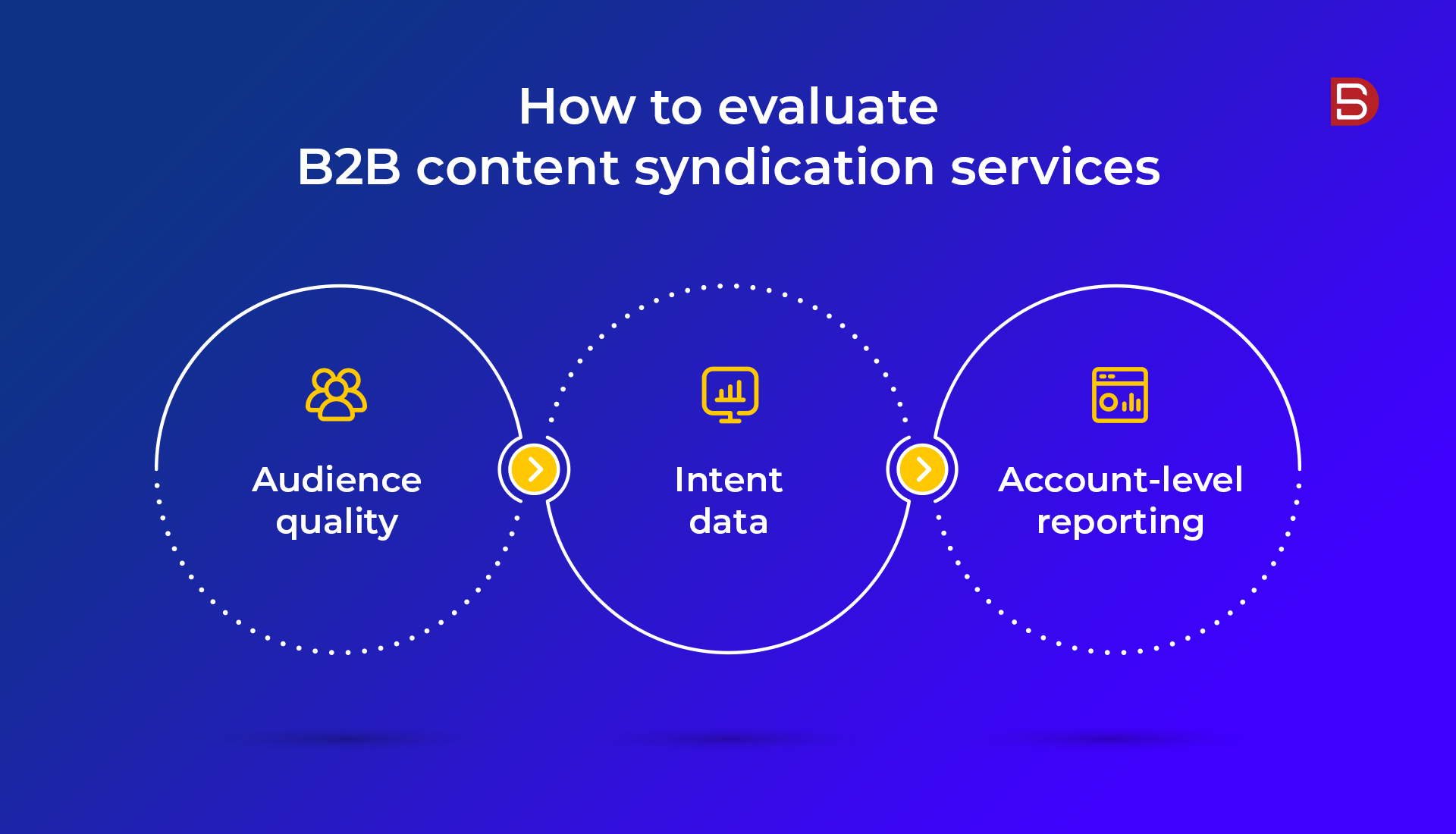
Not all B2B content syndication services are built the same. The difference between a useful vendor and an expensive exercise in list-building comes down to a few things.
First, audience quality. Where are the leads coming from? Are they from verified opted-in audiences with real professional context, or from broad consumer-style networks with B2B labels attached? Ask for source transparency.
Second, intent data. The best syndication partners layer intent signals on top of contact data. You should know not just who engaged with your content, but what else they have been researching. That context changes how you prioritize follow-up.
Third, account-level reporting. If you are running a buying-group strategy, you need to see engagement at the account level, not just the individual level. A single account with four engaged contacts is worth far more than four accounts with one contact each.
Companies that aligned their demand generation around account-level engagement saw 38% higher win rates compared to contact-level approaches.
However, not all syndication vendors operate at the same level. A few warning signs usually indicate poor quality:
- Lack of transparency on where leads are sourced from
- High lead volume with little to no overlap in target accounts
- No visibility into which content a lead engaged with
- Generic filtering options with no real control over audience quality
If a vendor cannot clearly explain how their audience is built and how engagement is tracked, you are likely buying contacts, not leads with intent.
- KEY TAKEAWAY
Connecting syndication to pipeline: Where the process breaks down
Content syndication lead generation creates awareness and interest. It does not close deals. The handoff between marketing and sales is where most of the value gets lost.
The fix is coordination before syndication starts, not after. Sales needs to know which accounts are being targeted, what content those accounts are seeing, and what follow-up message is relevant given the topic of engagement. A lead who downloaded a guide on data compliance should not receive a generic product demo pitch.
The other gap is nurture. Not every syndicated lead is ready for a sales conversation. Most are not. A nurture track that continues the conversation, adds depth to the topic, and builds trust over time is what converts content engagement into actual pipeline.
- KEY TAKEAWAY
Syndication without a connected nurture and sales enablement process will underdeliver. The strategy only works end to end.
How datamatics business solutions can help
For teams looking to move beyond single-contact lead generation, Datamatics Business Solutions takes a more structured approach to content syndication.
It focuses on targeting the right accounts, aligning content to different roles, and delivering leads with context and intent signals.
The goal is to reach multiple stakeholders within priority accounts and give sales something they can actually act on.
- QUICK TEST
Are you reaching the full buying group?
Identify gaps before they slow down your pipeline.
- FAQS
Frequently Asked Questions
1. What is content syndication lead generation?
It is the process of distributing your content through third-party platforms and networks to generate leads from audiences beyond your own. The leads come from people who have actively engaged with your content on those external channels.
2. How is content syndication different from paid advertising?
Paid ads drive traffic to your properties. Syndication places your content on external networks and returns contact data on who engaged. Syndication captures active content engagement, not passive clicks, which makes the intent signal significantly stronger than traditional paid advertising.
3. What types of content work best for syndication?
Research reports, whitepapers, practical guides, and topical webinars tend to perform well. Content that addresses a real business problem, without leading with a product pitch, earns more engagement across buying groups.
4. How do you measure the success of a content syndication strategy?
Look at account-level engagement, not just lead volume. Track how many contacts from a target account engaged, what content they consumed, and whether that account advances in pipeline. Cost per engaged account is a more useful metric than cost per lead.
5. How do B2B content syndication services handle lead quality?
Reputable providers use verified, opted-in audience networks with defined professional criteria. You can typically filter by job title, seniority, industry, company size, and intent signals. Always ask vendors to explain their audience sourcing before you commit.